A deck in Southeast Michigan has to handle more than backyard traffic. It needs to stand up to snow sitting against the boards, spring thaw, humid summers, freeze-thaw cycles, and the occasional wet leaf pile left in a shaded corner. The best materials for Michigan decks are the ones that fit those conditions, your maintenance expectations, and the way you plan to use the space.
Material selection affects more than appearance. It influences the framing requirements, long-term repair needs, safety underfoot, upfront budget, and how well the deck holds its value over time. A good-looking board cannot compensate for weak framing, improper drainage, or footings that were not designed for local frost conditions.
What Michigan Weather Demands From a Deck
Michigan decks face repeated moisture exposure. Rain and melting snow can work into board gaps, fastener locations, stair connections, and areas where the deck meets the home. When that moisture freezes, expands, and thaws again, small weaknesses become larger problems.
Sun exposure matters too. A south-facing deck in Birmingham may need better fade and heat resistance than a heavily shaded deck near mature trees in Grosse Pointe or Oakland County. Shade can keep boards cooler, but it also slows drying and creates favorable conditions for mildew, algae, and surface staining.
That is why the right decision is rarely just wood versus composite. The material must work with a properly built structure, sufficient board spacing, reliable flashing at the house, code-conscious railing details, and drainage that keeps water from collecting beneath the deck.
Best Materials for Michigan Decks by Priority
There is no single best deck board for every property. The right choice depends on whether you prioritize natural character, minimal maintenance, long-term moisture resistance, or a lower initial investment.
Pressure-Treated Lumber: The Practical Budget Choice
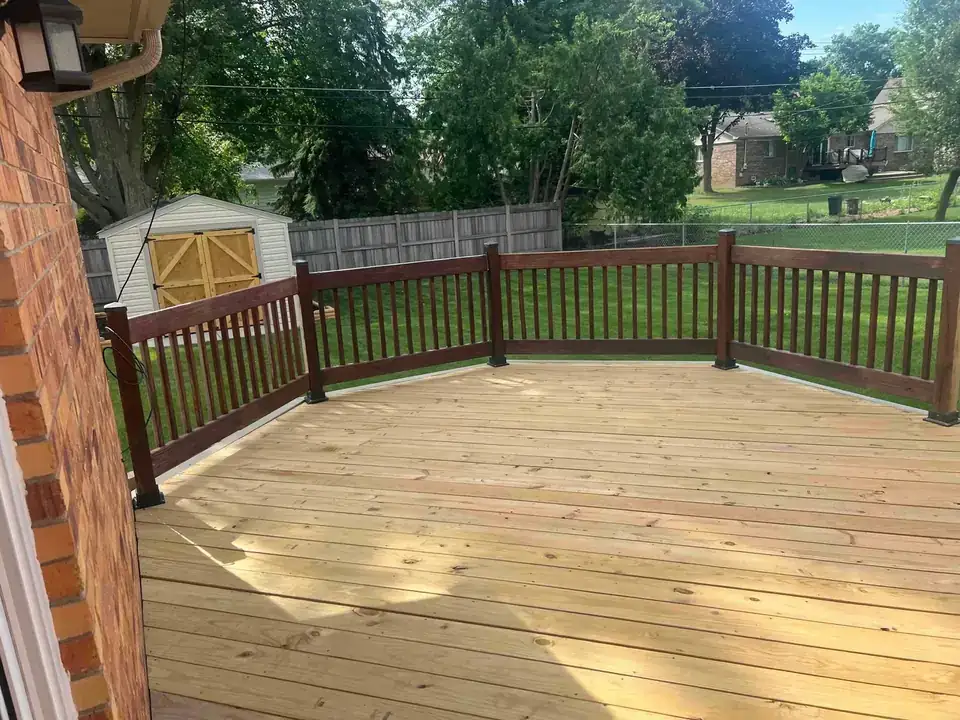
Pressure-treated lumber remains a common choice for deck framing and can also be used for decking. It is readily available, cost-effective, structurally capable, and familiar to most homeowners. For a family that wants a functional outdoor space without the upfront cost of premium decking, treated lumber can be the sensible option.
Its trade-off is maintenance. Wood needs time to dry after installation, then regular protection with a quality stain or water-repellent finish. Without that attention, boards can check, cup, split, fade, and develop surface mildew. Fasteners and hardware also need to be selected for treated wood because the preservatives can corrode incompatible metals.
For Michigan homes, pressure-treated lumber is often best used where it performs especially well: the structural frame. Joists, beams, posts, and other framing components are normally treated lumber even when the visible deck surface is composite or PVC. For an all-wood deck, homeowners should plan for periodic cleaning and refinishing as part of ownership.
Cedar: Natural Beauty With Ongoing Care
Cedar offers warm color, a more refined appearance than standard treated boards, and natural resistance to decay. It is lighter than treated lumber and can be a strong fit for homeowners who want a traditional wood deck with a premium look.
However, cedar is not maintenance-free and is not automatically the best answer for every Michigan yard. It can weather to gray if left unfinished, and it still needs protection from moisture and sun. It is also softer than many composite boards, so heavy furniture, grills, active children, and pet traffic can leave marks over time.
Cedar makes the most sense when the homeowner appreciates natural wood variation and is willing to maintain it. It is less suitable for someone looking for a surface that can be ignored for years at a time.
Composite Decking: A Strong All-Around Option
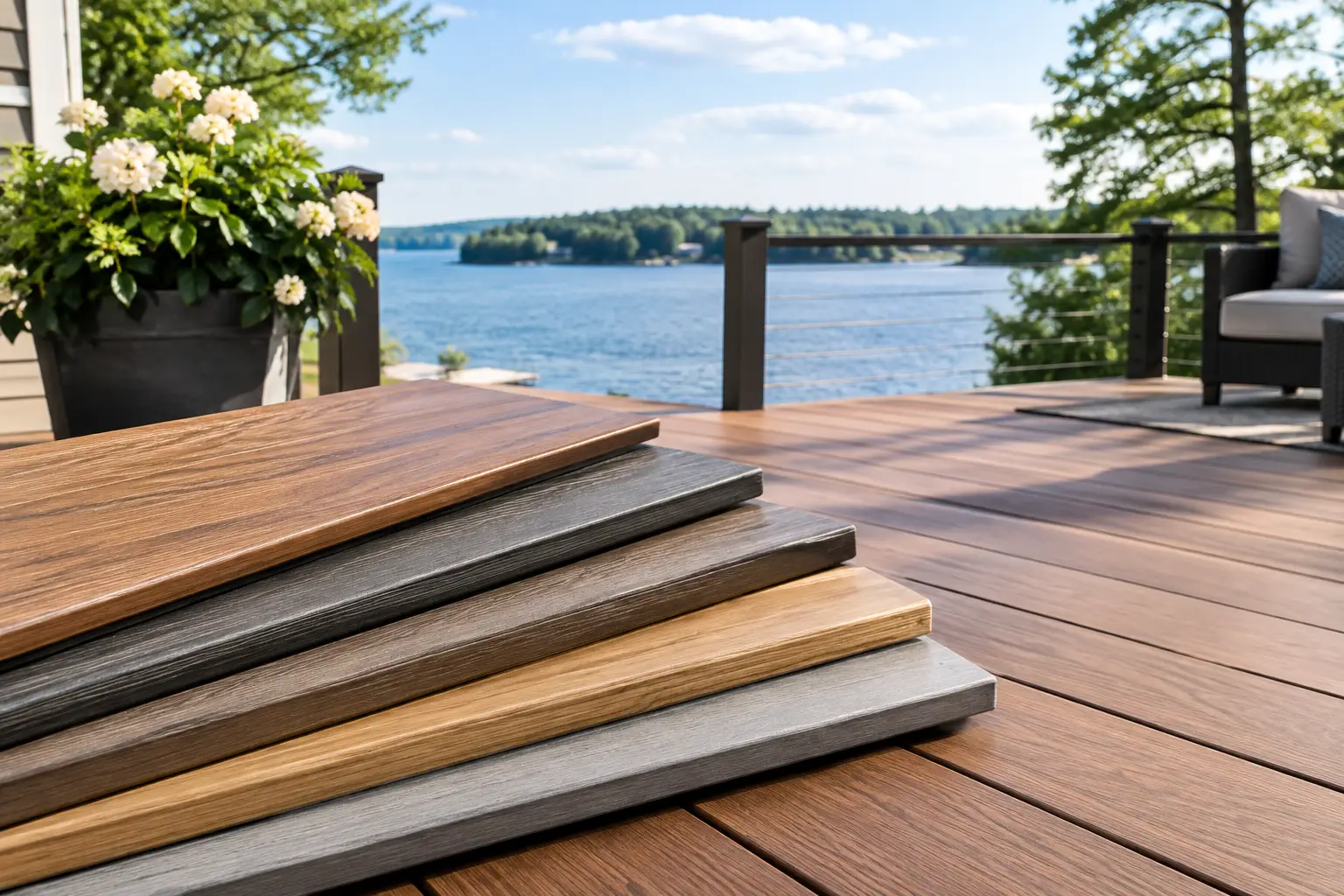
Capped composite decking combines wood fibers and recycled plastic with a protective outer shell. For many homeowners across Oakland County, Macomb County, and the five Grosse Pointes, it provides the best balance of appearance, durability, and manageable maintenance. It will not require staining or sealing, and quality products resist rot, splintering, and insect damage.
Composite is particularly useful on decks exposed to regular moisture, as long as the framing and installation details allow water to drain and air to circulate. Cleaning is generally limited to seasonal washing and prompt removal of food, pollen, dirt, and leaf debris.
The main considerations are cost, heat, and installation requirements. Composite costs more than basic wood, and darker colors can become noticeably hot in direct summer sun. Boards also expand and contract more than wood, so spacing, hidden fastener systems, and manufacturer installation requirements need to be followed closely. A poorly installed composite deck can look uneven or hold water despite using a high-quality product.
PVC Decking: Maximum Moisture Resistance
PVC decking is made without wood fibers, making it highly resistant to moisture, mold, mildew, and decay. It is a compelling choice for low-lying yards, heavily shaded lots, pool-adjacent spaces, and homeowners who want the lowest-maintenance option available.
Because PVC is lightweight and does not absorb water like wood-based products, it performs well through Michigan's wet seasons. Premium PVC boards also offer convincing grain patterns and color options that work well with higher-value homes and custom outdoor living projects.
The price is usually the largest obstacle. PVC decking typically costs more than composite, and it can have a different feel underfoot than wood. Like composite, it requires careful installation to accommodate movement with temperature changes. It is a premium material that is most worthwhile when moisture protection and minimal upkeep are the top priorities.
Aluminum Decking: Specialized and Long-Lasting
Aluminum decking is not the most common residential choice, but it deserves consideration in specific situations. It is noncombustible, resists rot and insects, and can be designed to shed water below the deck surface. That drainage capability can be valuable when a homeowner wants a dry patio or usable storage area beneath an elevated deck.
Its appearance is more contemporary and less wood-like than composite or PVC, and its price can be substantial. Aluminum also has a distinct sound and surface feel. For a standard backyard deck, it may be more than necessary. For a second-story deck where under-deck drainage is a major goal, it can be a practical long-term investment.
Do Not Overlook the Material Under the Deck
The visible boards get the attention, but the structure determines whether the deck remains safe and stable. Michigan's freeze-thaw conditions make properly designed footings, sound post connections, appropriate beams, and code-compliant ledger attachment essential.
Pressure-treated framing is standard, but it should be selected and installed for its intended ground-contact or above-ground use. Joist spacing may need to be tighter for certain composite or PVC boards than it would be for wood decking. Proper flashing where the deck connects to the house is equally important because water intrusion at that connection can damage the home's framing.
A deck also needs compatible fasteners, connectors, and hardware. This is not a place to mix materials casually. The wrong screw, hanger, or flashing detail can shorten the life of an otherwise well-built project.
How to Choose the Right Deck Material
Start with how you want to live with the deck after construction. If you enjoy maintaining natural wood and want the lowest upfront cost, pressure-treated decking may be appropriate. If you want the look of wood without annual staining, capped composite is often the best overall value. If wet conditions and minimal maintenance are the priority, PVC deserves serious consideration.
Also consider the setting. A deck beneath large trees needs a surface that is easy to clean and a design that promotes drying. A full-sun deck may benefit from lighter board colors. A raised deck with a patio below may justify an under-deck drainage approach or aluminum decking. Railings, stairs, lighting, privacy screens, and future additions such as a pergola can also affect the structural plan from the start.
Local permit requirements should be addressed before work begins, especially when a deck is attached to the home, elevated above grade, or includes stairs and guards. A professional builder can help coordinate the design, structural scope, and permit process so material choices support a deck that is built correctly rather than simply finished quickly.
A deck should feel like an extension of the home, not another maintenance problem waiting outside the back door. Christian Wylie LLC can help homeowners evaluate material options, structural requirements, and permitting needs before construction begins, so the finished space is ready for Michigan seasons and the years of use ahead.