A deck can become the most-used part of a Michigan home from the first warm weekend through football season. But the material underfoot affects far more than appearance. In the decision between wood versus composite decking, homeowners need to weigh upfront budget, ongoing maintenance, weather exposure, and how long they plan to stay in the home.
There is no single right answer for every property in Oakland and Macomb counties, Oakland County, Macomb County, Grosse Pointe, or Birmingham. A well-built wood deck can be a practical, attractive investment. A quality composite deck can reduce maintenance and hold its appearance for years. The best choice starts with an honest look at how the deck will be used and what level of upkeep makes sense for your household.
Wood Versus Composite Decking: The Main Difference
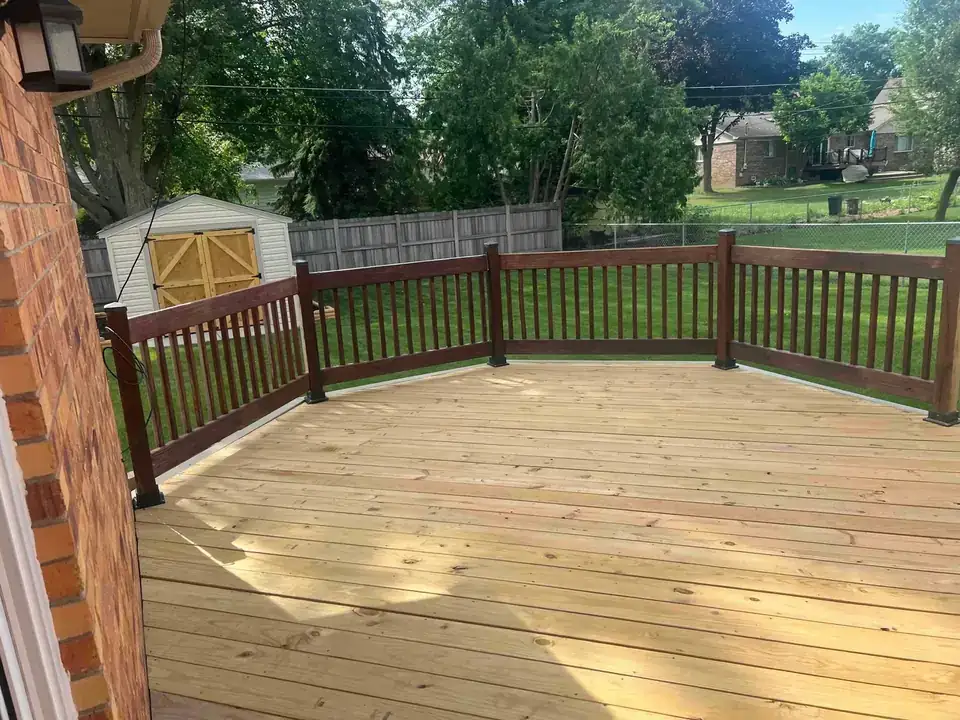
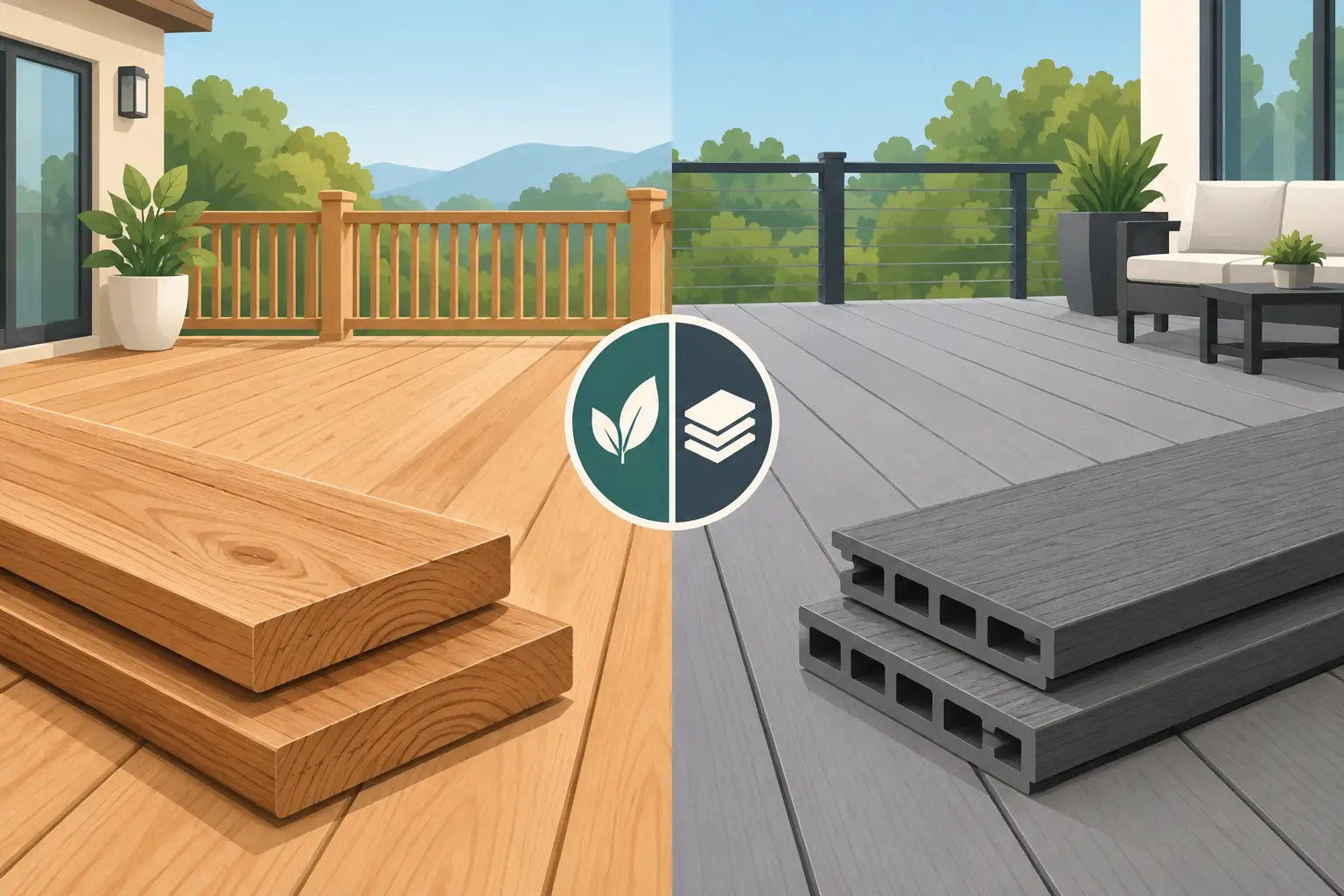
Natural wood decking is made from lumber, most commonly pressure-treated pine, cedar, or hardwoods. It delivers an authentic grain pattern, can be stained in a range of colors, and is usually the lower-cost option at installation. Wood is familiar, repairable, and especially appealing to homeowners who prefer a traditional exterior finish.
Composite decking is manufactured from a blend of recycled wood fibers and plastic materials. Most premium composite boards have a protective cap that improves resistance to staining, fading, and moisture. The result is a uniform product available in colors and textures that can resemble painted or stained wood without requiring regular refinishing.
The boards are only one part of the project. Whether a deck surface is wood or composite, its long-term performance depends on proper footings, framing, flashing, fasteners, drainage, railings, and code-conscious construction. A low-maintenance deck surface installed on poor framing is not a low-maintenance investment.
Upfront Cost and Long-Term Value
Pressure-treated lumber generally provides the most affordable entry point. For homeowners replacing an aging deck or working within a defined renovation budget, it can make a new outdoor living area possible sooner. Cedar and hardwoods cost more than pressure-treated lumber but offer distinct color, grain, and natural durability characteristics.
Composite decking usually costs more at the start, sometimes substantially more depending on the board line, railing system, stair details, and hidden fastening system selected. It can be a sensible choice for a homeowner planning to remain in the property for many years, particularly when avoiding repeated staining and board replacement has real value.
The comparison should not stop at the initial proposal. A wood deck generally needs cleaning and a protective stain or sealer on a regular schedule. The timing depends on sun exposure, tree cover, moisture, and product selection, but neglected wood can fade, splinter, crack, cup, and deteriorate sooner than it should. Composite typically requires routine washing rather than sanding, staining, or sealing.
Composite does not automatically produce a better return for every home. If a property may be sold in a few years, a properly constructed pressure-treated deck may offer the appearance and functionality the home needs without the higher initial cost. For a long-term family home where low upkeep matters, composite can justify its premium over time.
Think Beyond the Decking Boards
Railings, stairs, lighting, skirting, and the condition of the existing structure can affect a deck budget as much as the decking material. Elevated decks may require more substantial framing, guards, handrails, and carefully planned stair construction. If an older deck is being rebuilt, the contractor should assess the ledger connection, footings, framing condition, and water management before deciding whether any existing components can remain.
A clear estimate should separate the visible finish choices from necessary structural work. That gives homeowners a more accurate basis for comparing proposals.
How Michigan Weather Changes the Decision
Oakland and Macomb counties decks handle snow, rain, spring thaw, summer heat, humidity, fallen leaves, and repeated freeze-thaw cycles. Both materials can perform well in these conditions when installed correctly, but they respond differently.
Wood absorbs moisture. Proper board spacing, sealing, drainage, and airflow help it dry between wet periods. Areas below large trees or on the shaded side of a home may stay damp longer, which increases the need for regular cleaning and maintenance. Pressure-treated lumber is designed to resist decay, but it still benefits from attention before moisture damage becomes extensive.
Composite is highly resistant to moisture-related rot and insect damage. That makes it particularly attractive around pools, near shaded yards, and on decks exposed to frequent rain or snow. However, composite boards expand and contract with temperature changes. The installation must follow the manufacturer’s spacing and fastening requirements, especially at board ends, picture-frame borders, and stair treads.
Surface temperature is another real consideration. Dark composite colors can become hot in direct summer sun. Lighter colors may be more comfortable for bare feet, particularly on an open south- or west-facing deck. Wood can also heat up, but color selection has an especially noticeable effect with composite products.
Snow removal matters as well. A plastic shovel is generally the safer choice for either material because metal edges can gouge boards or damage their finish. Avoid relying on harsh de-icing materials without first confirming that they are appropriate for the decking product and nearby landscaping.
Maintenance: What Homeowners Actually Sign Up For
Wood requires a commitment, not just an occasional weekend of cleanup. At minimum, homeowners should inspect it each spring for loose fasteners, raised nail heads, soft areas, split boards, and peeling finish. Washing removes dirt, pollen, mildew, and leaf residue. When the protective coating has worn down, the deck should be cleaned, allowed to dry properly, and re-stained or sealed.
Some homeowners enjoy that process and value the ability to change the deck’s color over time. Others would rather spend their weekends using the deck than maintaining it. Neither preference is wrong, but it should influence the material decision from the beginning.
Composite simplifies maintenance, but it is not maintenance-free. It should still be swept, washed, and checked for debris between boards. Food spills, pollen, and mildew can collect on the surface, especially in shaded areas. Capped composite generally cleans up well with mild soap, water, and a soft brush, but homeowners should follow the specific manufacturer’s care guidance.
If a wood board becomes damaged, replacement is often straightforward, although matching older stain can take work. Composite boards can also be replaced, but color matching may be difficult after years of sun exposure or if a product line has changed. Keeping a few extra boards from the original installation can be a practical precaution.
Appearance, Design, and Everyday Use
Wood has depth and variation that manufactured materials cannot reproduce exactly. Cedar can bring warmth to a classic home, while a stained pressure-treated deck can complement many exterior styles. Wood also gives homeowners flexibility to refresh the look later with a new stain color.
Composite offers consistency. Homeowners can choose from a broad range of browns, grays, and variegated finishes without planning around a future staining schedule. It works especially well for contemporary renovations and larger decks where a clean, uniform appearance is part of the design goal.
Texture and traction deserve attention. Many composite products are designed with embossed grain and slip-resistant surfaces, but performance varies by product. Wood can become slippery when wet or covered with algae if it is not maintained. For either option, stair layout, lighting, handrail placement, and drainage have just as much to do with safe daily use as the board material itself.
For homes with children, pets, or frequent entertaining, consider how the deck will be lived on. Composite is less likely to produce splinters and is easy to clean after a cookout. Wood is often more forgiving on the initial budget, leaving room for larger stairs, a covered area, built-in seating, or other features that may improve how the space functions.
Construction Quality Matters More Than the Sales Pitch
Decking material is visible, but the structure beneath it carries the load. A properly planned deck begins with the home connection, appropriate footings, beam and joist sizing, corrosion-resistant hardware, and details that direct water away from the house. In many projects, local permits and inspections are part of protecting that investment.
Composite boards are heavier than most wood decking and may require joist spacing that differs from standard wood deck layouts. Stair framing, fascia, railing posts, and the transition where the deck meets the house should all be planned for the chosen material rather than improvised during installation.
Homeowners should also be cautious about simply covering an old deck frame with new composite boards. Existing framing may have hidden rot, inadequate spacing, outdated connections, or insufficient support for the new surface. A professional assessment can determine whether resurfacing is appropriate or whether rebuilding is the safer long-term path.
Choosing the Right Deck for Your Home
Choose wood when upfront cost is a major factor, you appreciate natural material, and you are prepared to maintain the finish. It is also a strong choice when the project budget needs to prioritize structural upgrades or expanded deck size.
Choose composite when you want reduced upkeep, consistent color, strong moisture resistance, and plan to enjoy the deck for many years. It is often a good fit for busy households and homeowners who want outdoor space without adding a regular staining project to the calendar.
Before selecting a board color or comparing samples, start with the structure and the way your family will use the space. Christian Wylie LLC can help homeowners across Oakland County, Macomb County, and the five Grosse Pointes evaluate deck materials, framing needs, permit considerations, and design options through a clear, project-specific estimate. A deck should feel like an extension of the home, built for Michigan weather and ready for the years you plan to spend on it.