
A kitchen wall comes down, and the framing behind it is not carrying the load anyone expected. A basement floor is opened for new plumbing, and the drain line is cracked. In many Oakland and Macomb counties homes, especially older properties, conditions hidden behind finished surfaces can change a project quickly. That is why renovation contingencies matter: they give homeowners and contractors a defined, responsible way to handle legitimate unknowns without turning every surprise into a budget crisis.
A contingency is not a vague extra charge or a contractor expecting the worst. It is a planned portion of the renovation budget reserved for work that cannot be confirmed until demolition, investigation, or permit review moves forward. When it is discussed clearly before construction begins, it protects the homeowner's investment and helps the project continue with fewer rushed decisions.
What a Renovation Contingency Actually Covers
A proper renovation estimate should separate the defined scope of work from contingency funds. The defined scope covers the work visible in the plans and existing conditions: demolition, framing, electrical updates, plumbing, finishes, labor, materials, and other agreed-upon items. A contingency addresses conditions that were not reasonably visible or measurable when the estimate was prepared.
For example, a contractor may identify that a bathroom requires a new exhaust fan and electrical circuit. But until portions of the ceiling or wall are opened, no one may know whether an earlier remodel left improper wiring, water damage, or framing that does not meet current requirements. Correcting those conditions is not simply a change in taste or an add-on. It may be necessary for safety, code compliance, and a durable finished result.
Contingency funds are commonly used for hidden structural repairs, deteriorated subflooring, outdated or unsafe wiring, plumbing failures, mold-related material removal, foundation concerns, or unforeseen site conditions. In a home renovation, these items are often discovered only after work begins. The goal is not to spend the contingency. The goal is to have a controlled plan if the project reveals something that must be addressed.
Why Renovation Contingencies Matter in Older Homes
Oakland and Macomb counties has many well-built homes with decades of additions, repairs, and remodeling work behind their walls. That character can be a major advantage, but it also means the existing construction may not match current drawings, past permits, or assumptions made during a walkthrough.
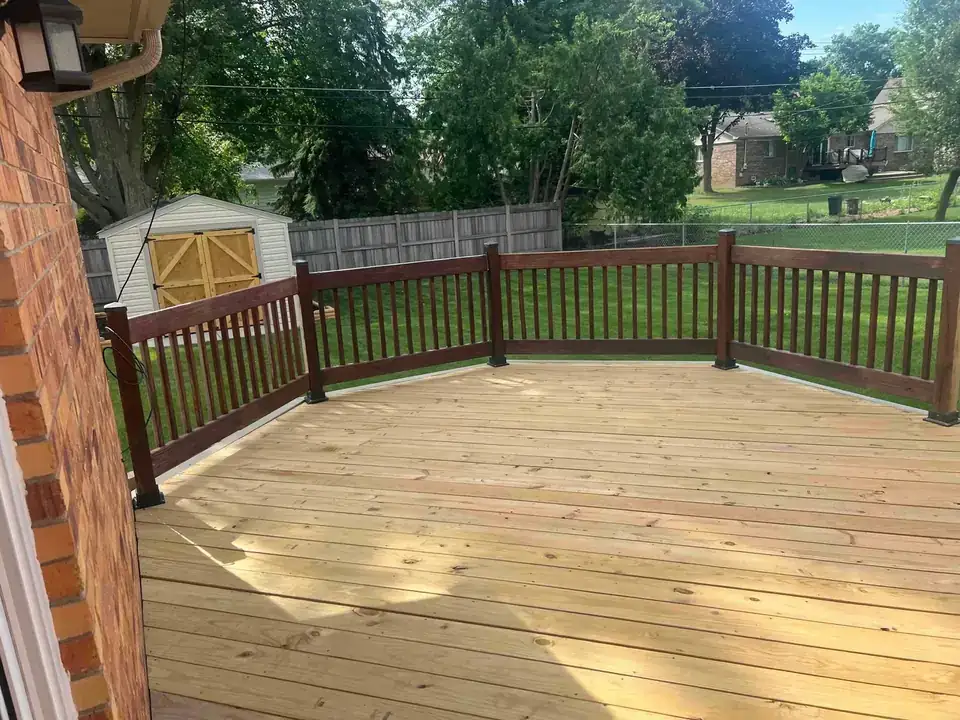
A Birmingham home may have original framing that needs reinforcement before an open-concept layout can be created. A Grosse Pointe basement might need moisture-related repairs before it can become finished living space. In Oakland or Macomb County, a deck replacement can expose ledger attachment issues, rot at the exterior wall, or grading conditions that affect the final design. These are not signs that a project was poorly planned. They are the practical realities of working on an existing structure.
The alternative to a contingency is often less reassuring than it sounds. A contractor can either price every possible risk into the base estimate, which may make the initial number unnecessarily high, or provide a low number that does not realistically account for likely unknowns. A clear contingency creates a more honest middle ground: the known work is priced directly, and potential hidden conditions are addressed if and when they are verified.
A Contingency Is Different From a Design Allowance
Homeowners sometimes use the terms interchangeably, but allowances and contingencies serve different purposes. An allowance is a budget placeholder for a selection that has not been finalized, such as tile, lighting, appliances, cabinetry hardware, or plumbing fixtures. If you choose a product above the allowance, the project cost changes because of a selection decision.
A contingency is for an unknown condition in the construction itself. If demolition reveals damaged framing that needs replacement, that is a contingency issue. If you decide after work starts that you want custom cabinets instead of the originally selected cabinet line, that is a scope change.
Keeping these categories separate matters because it makes the budget easier to understand. You should be able to see what is included in the contracted work, what money is reserved for unconfirmed conditions, what amounts are allowances for selections, and what would require a written change order. That level of organization helps prevent disagreements later.
The Right Amount Depends on the Scope
There is no single percentage that fits every renovation. A straightforward deck project with accessible conditions and a limited scope may need a smaller reserve than a whole-home renovation involving structural changes, older plumbing, multiple trades, and permit requirements. Projects that include basement remodeling, demolition, additions, or opening load-bearing walls typically have more unknowns than cosmetic updates.
The age of the house, the quality of available records, access to existing systems, and the amount of demolition all affect the appropriate contingency. A thorough preconstruction process can reduce uncertainty through site review, measurements, selective investigation, engineering input, and permit planning. It cannot eliminate uncertainty entirely without opening every wall and floor before the project is approved.
Homeowners should be cautious of anyone who promises that a significant renovation has no possibility of hidden conditions. Confidence is valuable, but it should be based on a clear scope, field experience, and a process for handling the unexpected, not on pretending older homes contain no surprises.
How to Keep Contingency Spending Accountable
A contingency works only when there is a defined process for using it. Before signing a contract, ask how hidden conditions will be documented, who authorizes added work, and how unused funds are handled. The answer should be straightforward.
When an issue is found, the contractor should explain what was discovered, why it affects the project, what correction is recommended, and how it affects cost and schedule. Photos, site discussions, and written change documentation help homeowners make an informed decision. If the work involves structure, electrical systems, plumbing, or permits, the explanation should also address the relevant code or safety requirement.
Not every unexpected finding needs the same response. Some issues are mandatory to correct before work can continue. Others may present options, such as repairing a limited area now or expanding the scope for a more comprehensive solution. A capable contractor will explain the trade-off rather than pressure a homeowner into a decision without context.
It is also reasonable to request regular budget updates during construction. You should know how much contingency remains, what it has been used for, and whether upcoming phases could introduce additional risk. This is particularly useful on multi-room renovations and whole-house projects where discoveries in one area can influence work in another.
Contingencies Help Protect the Schedule, Too
Most homeowners focus first on cost, but a reserve also helps protect the construction schedule. When hidden damage or noncompliant work is uncovered, delaying the decision can hold up framing, inspections, drywall, flooring, or finish installation. Those delays can affect trade scheduling and material deliveries.
A planned contingency gives the project team a path to respond quickly once an issue is documented and approved. It does not mean there will be no delay. Structural repairs, engineering changes, special-order materials, or permit revisions can take time. But the project is less likely to stall because the budget discussion starts from zero after the walls are already open.
This is one reason comprehensive project coordination matters. Renovations involve connected systems, not isolated tasks. Demolition can expose framing issues. Framing can affect mechanical routes. Mechanical changes can influence insulation, drywall, and inspection timing. Working with a contractor who understands the full sequence helps keep decisions grounded in the overall project rather than a single trade's immediate task.
Questions to Ask Before Construction Starts
A renovation proposal should leave room for a practical conversation, not just a bottom-line price. Ask whether the estimate includes a contingency, what types of conditions it is intended to cover, and whether the amount is included in the contract total or held separately. Ask how changes are approved and whether unused contingency funds remain with the homeowner.
You should also ask what has already been investigated. Has the contractor reviewed accessible framing, electrical panels, plumbing locations, drainage, or the likely permit path? Have structural changes been identified early enough to involve engineering if needed? Better investigation reduces risk, while a contingency manages the risk that remains.
For major projects, avoid making financial decisions based only on the lowest initial estimate. Compare the scopes carefully. An estimate that excludes permit coordination, demolition details, structural work, or realistic unknowns may look less expensive at first, but it can create more uncertainty once construction begins.
Christian Wylie LLC approaches substantial residential work with the understanding that planning, permits, skilled trade coordination, and site conditions all affect the final result. A well-defined contingency is part of that responsible planning. It allows the work to address what the home actually needs while keeping the homeowner informed and in control of decisions.
The most useful renovation budget is not the one that assumes every wall is perfect. It is the one that gives you a clear path when the house tells a different story - and enough preparation to make the right decision without compromising the work.