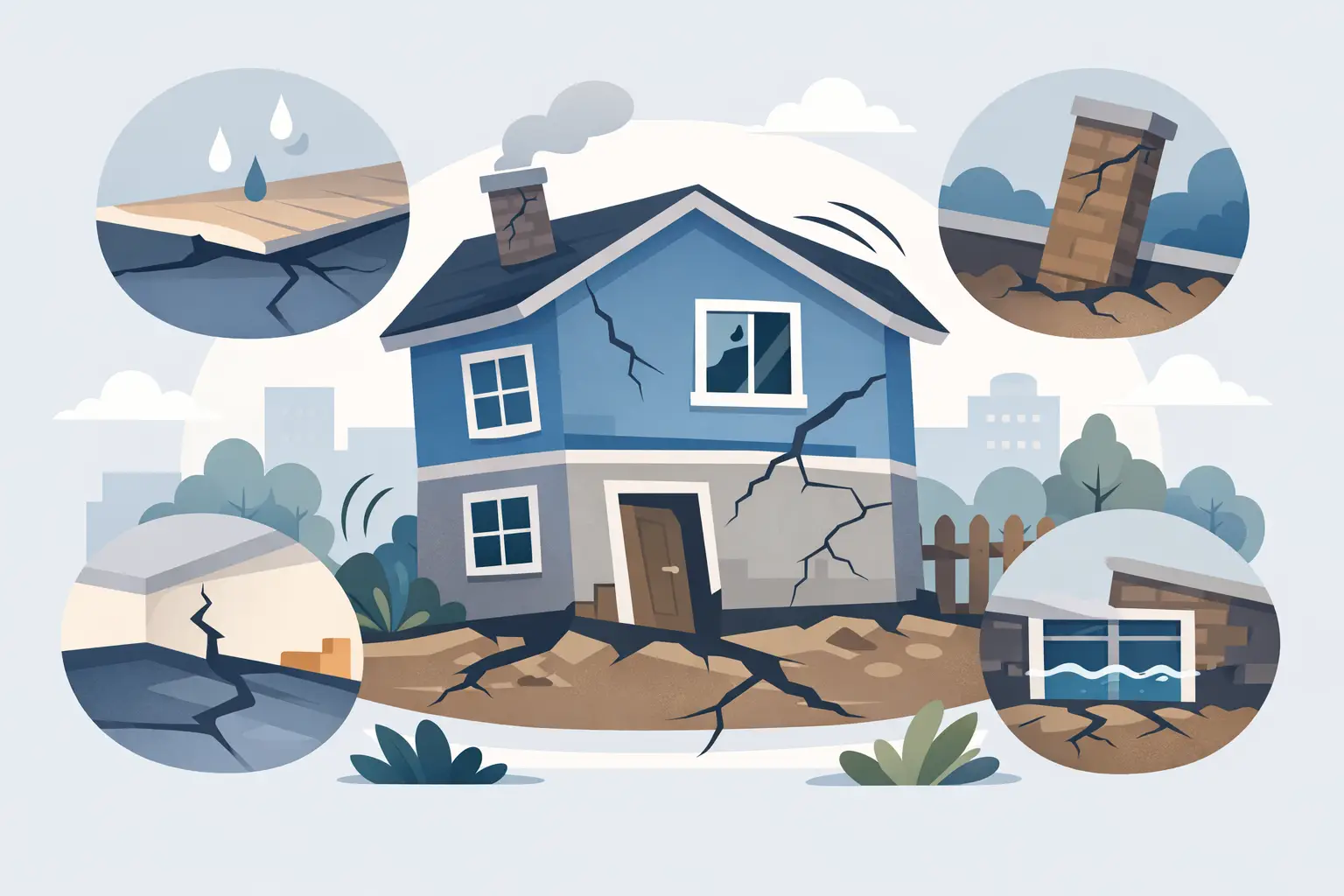
A sticking bedroom door after a humid week is usually an annoyance. A door that suddenly will not latch alongside new wall cracks, sloping floors, or a widening gap at the trim is a different conversation. Knowing the signs your house needs structural repair can help homeowners across Oakland County, Macomb County, and the five Grosse Pointes act before a localized issue becomes a larger renovation, safety, or resale problem.
Older homes across Birmingham, Grosse Pointe, Oakland County, and Macomb County often have decades of settling, additions, basement moisture exposure, and previous remodeling behind them. Not every crack means the home is failing, but patterns matter. The location of the issue, whether it is growing, and whether other symptoms appear nearby can point to movement in the foundation, framing, beams, joists, or load-bearing walls.
Signs Your House Needs Structural Repair
1. Cracks that are widening or running diagonally
Hairline cracks in drywall can come from normal seasonal movement, particularly in Michigan homes that see wide swings in temperature and humidity. A crack deserves closer attention when it keeps returning after repair, becomes wider than a thin hairline, runs diagonally from a window or door corner, or appears alongside separation at baseboards and crown molding.
Diagonal cracks can indicate that one section of the house is moving differently from another. Cracks in brick, block foundation walls, or exterior masonry should also be evaluated, especially if they form a stepped pattern along mortar joints. The concern is less about one cosmetic line and more about an active change in the structure supporting it.
2. Doors and windows that no longer operate correctly
Doors can stick because of humidity, worn hinges, or a house that simply needs adjustment. But several doors or windows that suddenly stick, swing open on their own, will not latch, or show uneven gaps around their frames may reflect framing movement.
Pay attention to timing. If a single exterior door has always rubbed in August, the fix may be straightforward. If doors on different levels begin binding at the same time, or a window frame visibly separates from the wall, a contractor should look beyond the hardware.
3. Floors that slope, bounce, or feel uneven
A floor that feels noticeably off-level is one of the more familiar warning signs in an older home. It may result from undersized or damaged joists, long-term settling, moisture-related deterioration, altered support posts, or a previous renovation that changed how loads are carried.
A little variation does not automatically mean a major repair. Many historic homes have floors that are not perfectly level and remain stable for years. What raises concern is a new slope, a soft or bouncy section, cracked floor tile, or a floor that changes around a specific wall, beam, or basement support area.
4. A sagging roofline or ceiling
A roofline should generally look straight when viewed from the street. A visible dip, bow, or uneven ridge can signal problems with roof framing, rafters, trusses, or bearing walls below. Inside, watch for ceilings that sag, drywall joints that pull apart, or cracks where the wall meets the ceiling.
Roof issues can also begin with water. A long-standing leak may rot framing members before stains become obvious in finished rooms. This is why a roofing concern, attic moisture problem, and ceiling movement should be considered together rather than treated as separate cosmetic repairs.
5. Basement walls that bow, crack, or leak
Michigan soil and freeze-thaw cycles can put significant pressure on foundation walls. Horizontal cracks in a basement wall, inward bowing, crumbling block, or water entering through the same area are conditions that need prompt professional attention.
Vertical foundation cracks are not always structural, but they should be monitored for width, water intrusion, and change over time. A contractor can help identify whether drainage correction, waterproofing, reinforcement, excavation, framing work, or an engineering review is appropriate. Painting over the crack may improve appearance, but it does not address movement or moisture behind the wall.
6. Gaps between building materials
Look closely where different parts of the home meet. Gaps between walls and ceilings, between exterior brick and window frames, around chimneys, or where an addition joins the original house can reveal shifting that deserves investigation.
Small caulk failures happen with normal expansion and contraction. Larger, uneven, or growing gaps are more concerning, particularly when they appear with cracks, sticking doors, or changes in floor level. In a home with an older addition, the original structure and addition may have settled differently over time.
7. Cracked or separated exterior masonry
Brick is durable, but it does not hide movement well. Stair-step cracks, displaced bricks, a leaning chimney, or masonry pulling away from the house can indicate settlement or inadequate support. These issues should not be dismissed as ordinary aging, especially where the chimney or brick veneer is visibly out of alignment.
Because masonry is heavy, repairs may involve more than repointing mortar. The underlying foundation, lintels, framing, and drainage conditions may need to be assessed before exterior finishes are restored.
8. Water damage, rot, or insect damage near structural framing
Water is often the first cause and structural damage is the later result. In a basement, crawlspace, attic, or around exterior walls, look for darkened wood, soft framing, recurring moisture, musty odors, termite damage, or joists that appear notched, split, or deteriorated.
A finished basement can conceal these conditions until a floor begins to sag or a wall shows cracking. Before remodeling a basement or opening up a main-floor plan, it is wise to inspect accessible framing and resolve moisture sources first. New finishes should not be used to cover an unresolved structural problem.
9. Posts, beams, or joists that have been altered
Past renovations can leave behind structural shortcuts. A basement post may have been moved to create open space, a beam may be supported by temporary-looking materials, or floor joists may have been cut for plumbing, ductwork, or wiring. These changes do not always create an immediate failure, but they can reduce the structure's ability to carry loads safely.
This is especially relevant before removing a wall, enlarging an opening, adding a second-story bathroom, or finishing a basement. What appears to be a simple layout change may require a properly sized beam, engineered support details, permits, and inspection. Structural framing should be planned as part of the full project, not handled after demolition has started.
10. Changes that appear quickly after weather or construction work
A crack that has existed for years may be less urgent than a crack that appears after a major rainstorm, plumbing leak, nearby excavation, foundation drainage issue, or interior demolition project. Sudden changes are valuable information because they may point to an active cause.
Take dated photos and note what changed. Measure a crack if practical, record whether doors began sticking, and watch for water entry. This information helps a qualified professional distinguish a stable condition from one that needs immediate action.
What to Do When You Notice Structural Warning Signs
Start by avoiding cosmetic fixes that could hide the evidence. Do not simply patch recurring drywall cracks, shim a sagging floor, or remove a questionable support post to gain space. If there is visible bowing, major separation, a compromised beam, or a safety concern, limit use of the affected area until it has been evaluated.
The right next step depends on the condition. Some projects require drainage improvements or foundation repair specialists. Others call for a structural engineer to identify the cause and specify repairs. When the work involves rebuilding framing, replacing damaged members, installing beams, modifying load-bearing walls, or coordinating permits and inspections, an experienced residential builder can manage the construction scope.
For substantial repairs, ask clear questions about the source of the problem, the proposed repair method, permits, inspection requirements, and how finished surfaces will be restored. A good repair plan addresses both the damaged structure and the condition that caused it, whether that is water intrusion, poor drainage, inadequate support, or an earlier alteration.
Christian Wylie LLC helps homeowners across Oakland County, Macomb County, and the five Grosse Pointes coordinate structural framing, demolition, renovation work, and permit-conscious project execution when a home needs more than a surface-level repair. A site review can clarify what is cosmetic, what needs monitoring, and what should be addressed before the next phase of renovation.
Your home does not need to be perfect to be sound, particularly in an established neighborhood with older construction. But when several warning signs appear together or a condition is getting worse, early evaluation is usually the most practical way to protect the home you have worked hard to maintain.